
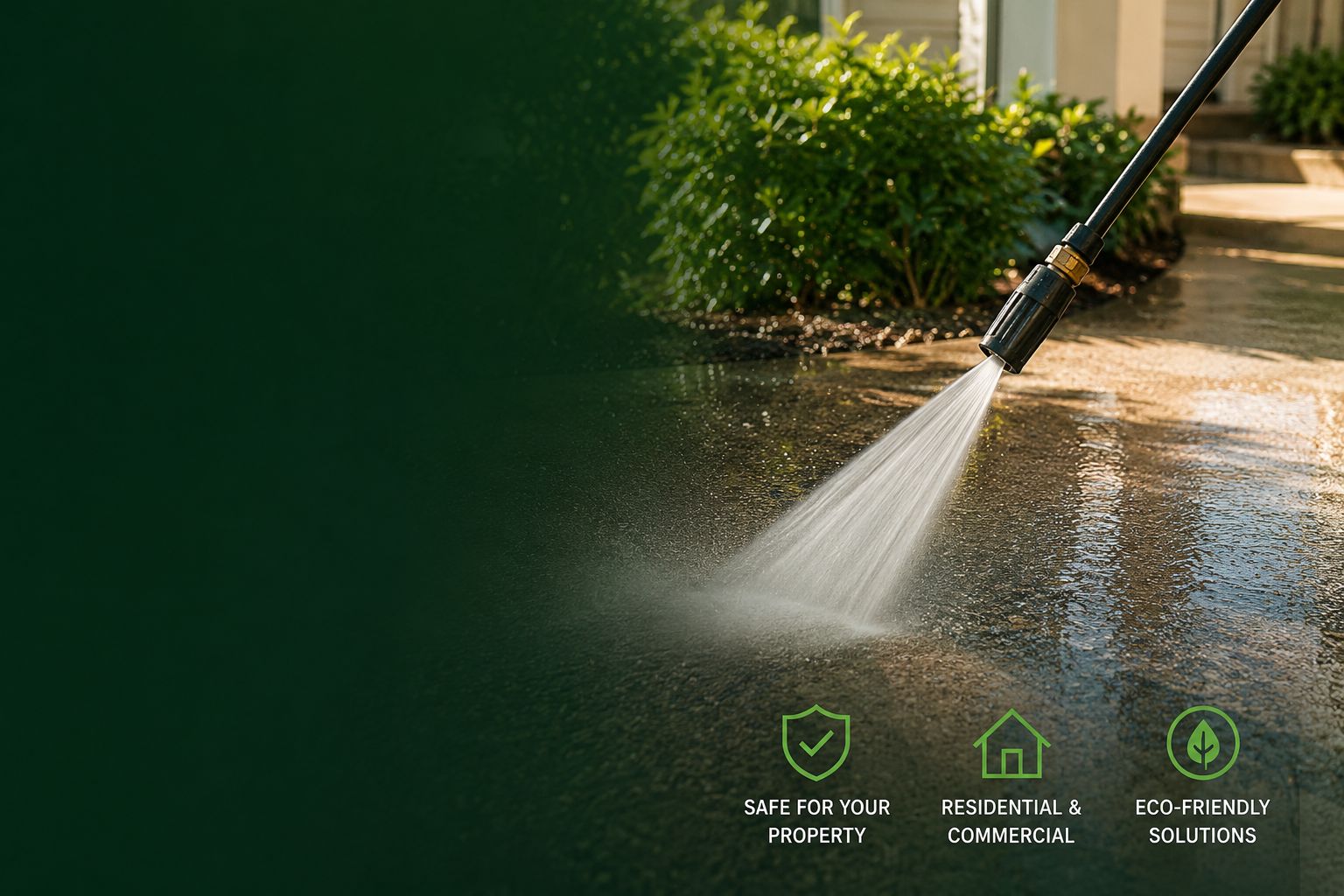
Many homeowners notice green stains appearing on their driveway, siding, fence, or pool deck and assume it’s just dirt. In reality, that green discoloration is often algae—a common problem throughout Florida that can quickly spread across exterior surfaces if left untreated.
While algae may seem like a cosmetic issue at first, it can lead to safety concerns, surface deterioration, and increased maintenance costs over time.
Why Algae Grows So Easily in Florida
Florida provides the perfect environment for algae growth.
Several factors contribute to the problem:
- 🌧️ Frequent rainfall throughout the year
- 💧 High humidity levels
- 🌿 Shaded areas that stay damp for long periods
- 🍃 Organic debris from trees and landscaping
- ☀️ Warm temperatures that encourage growth year-round
Because of these conditions, algae can begin forming on exterior surfaces much faster than many homeowners expect.
Common Areas Where Algae Appears
Algae can develop almost anywhere moisture is present.
The most common locations include:
- Driveways and sidewalks
- Pool decks and patios
- House siding
- Fences and gates
- Roof surfaces
- Screen enclosures
- Walkways and entry areas
The longer algae remains, the more difficult it becomes to remove completely.
Why Algae Is More Than Just an Appearance Issue
Many homeowners focus on how algae affects curb appeal, but there are other important concerns.
Algae can:
- ⚠️ Create slippery surfaces that increase the risk of falls
- ⚠️ Trap moisture against surfaces
- ⚠️ Contribute to premature deterioration of materials
- ⚠️ Make homes appear poorly maintained
- ⚠️ Spread rapidly across large areas if untreated
Addressing algae early helps prevent these problems from becoming more serious.
Professional Cleaning Removes Algae Safely
Removing algae requires more than simply rinsing it with a garden hose.
Professional pressure washing and soft washing help:
- Remove visible algae growth
- Eliminate organic buildup at the source
- Restore the appearance of exterior surfaces
- Reduce the likelihood of rapid regrowth
- Protect delicate materials from damage during cleaning
Different surfaces require different cleaning methods, which is why professional assessment is important.
Preventing Algae From Returning
While algae is common in Florida, regular maintenance can help keep it under control.
Helpful preventative measures include:
- ✅ Routine exterior cleaning
- ✅ Keeping gutters functioning properly
- ✅ Trimming vegetation to improve sunlight exposure
- ✅ Removing debris from around the property
- ✅ Addressing drainage issues that create standing moisture
Consistent maintenance is the best defense against recurring algae growth.
Protecting Your Property Year-Round
Whether it appears on a driveway, roof, patio, or siding, algae is something homeowners should address sooner rather than later. Removing it promptly helps improve appearance, increase safety, and protect exterior surfaces from unnecessary wear.
For homeowners throughout Lakeland, Bartow, Mulberry, Winter Haven, Auburndale, Plant City, and surrounding Polk County communities, routine pressure washing is one of the most effective ways to keep algae under control and maintain a cleaner property.
Frequently Asked Questions
What causes green algae on driveways and siding?
Green algae typically develops due to moisture, humidity, shade, and organic debris that create ideal growing conditions.
Is algae dangerous on walkways and patios?
Yes. Algae can create slippery surfaces that increase the risk of slips and falls, especially after rain.
Can pressure washing remove algae completely?
Professional pressure washing and soft washing effectively remove algae and help reduce the likelihood of immediate regrowth.
How quickly can algae return after cleaning?
The timeframe varies depending on moisture levels, shade, and environmental conditions, but routine maintenance helps keep surfaces cleaner longer.
Should algae be removed as soon as it appears?
Yes. Early removal helps prevent spreading, reduces safety hazards, and protects exterior materials from long-term damage.